
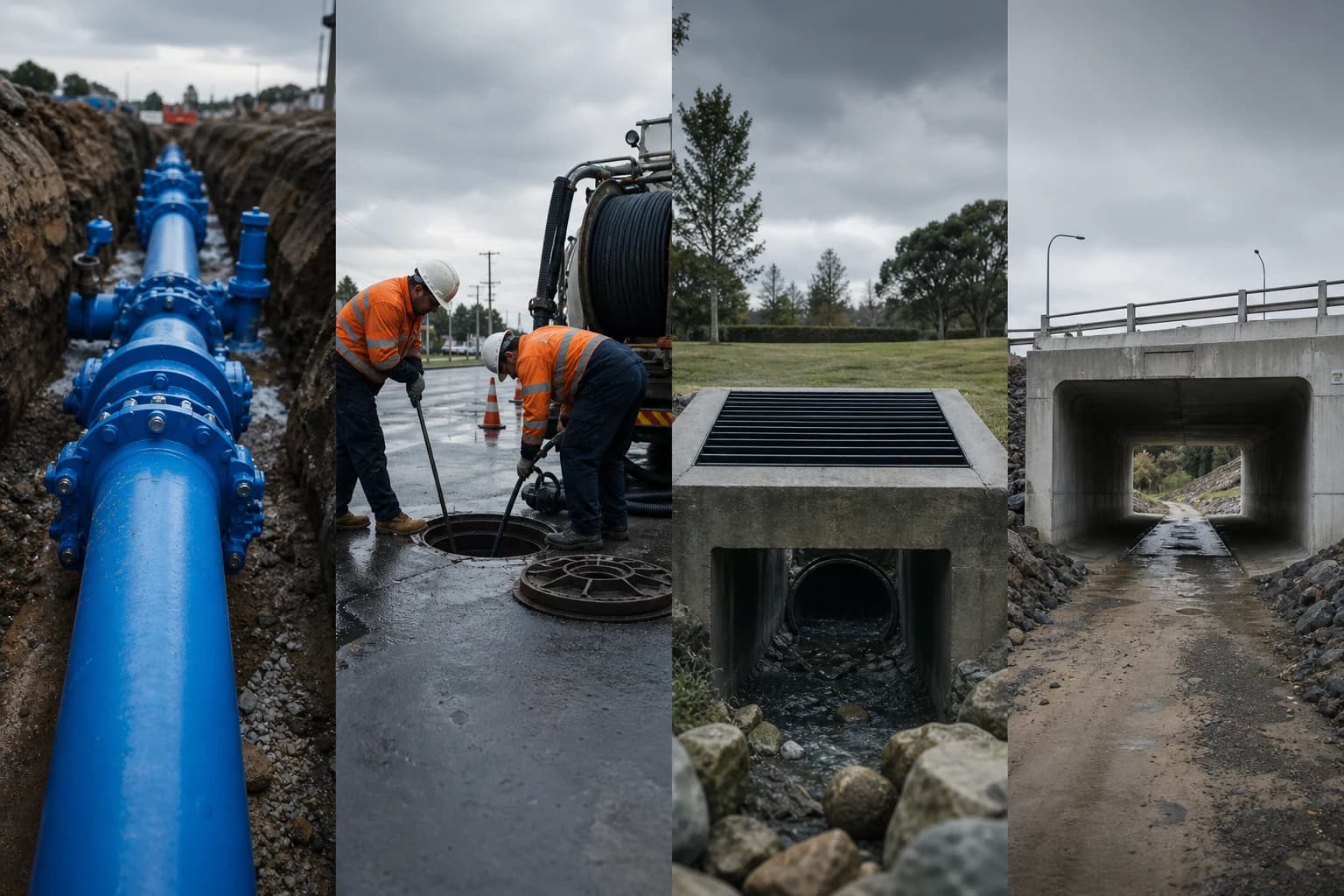
The Four Waters Explained: Potable Water, Wastewater, Stormwater and Culverts
A clear explainer of four waters infrastructure — what potable water, wastewater, stormwater, and culvert assets do, how they differ, and how Sydney and NSW asset owners plan delivery across live networks.
Service intelligence
Potable, wastewater, stormwater, and culverts in context
On this page
Across Sydney and NSW, asset owners and contractors often group water-related works under four waters infrastructure — potable water, wastewater, stormwater, and culverts. The label is practical, not academic: it reflects how programmes are procured, accredited, and delivered on live networks where isolations, hygiene, flow paths, and corridor access all behave differently.
If you are new to utility programmes, the four waters framework helps you separate drinking-water assets from sewer systems, overland drainage networks, and culvert structures that carry flows under roads. For a broader view of who delivers this work, see what a water infrastructure contractor does in Sydney before diving into asset types.
What four waters infrastructure means on NSW programmes
Four waters infrastructure is the shorthand utilities, councils, and contractors use when a single corridor or capital programme touches more than one water-related asset class. Rather than treating each system in isolation, programme leads map dependencies — shared trenches, competing outage windows, traffic control, and environmental controls — across all four.
On metropolitan Sydney sites, that might mean a road renewal with stormwater pit upgrades, a parallel potable main renewal, and a culvert crossing within one staging plan. In regional NSW, programmes may be more dispersed, but the same asset categories apply.
Coreflow delivers across the four waters for water authorities, councils, contractors, and asset owners. Explore the full water infrastructure services capability map before scoping individual asset packages.
Potable water infrastructure: securing drinking-water networks
Potable water infrastructure covers the assets that transport treated drinking water to homes, businesses, and public facilities. Typical elements include water mains, pressure pipelines, valves, hydrants, service connections, and storage interfaces — all designed to maintain water quality and reliable pressure.
Delivery focuses on isolation discipline, pressure testing, material standards, and live tie-ins that keep communities supplied while ageing mains are renewed. Hygiene risk is lower than wastewater, but outages and pressure loss have immediate community impact.
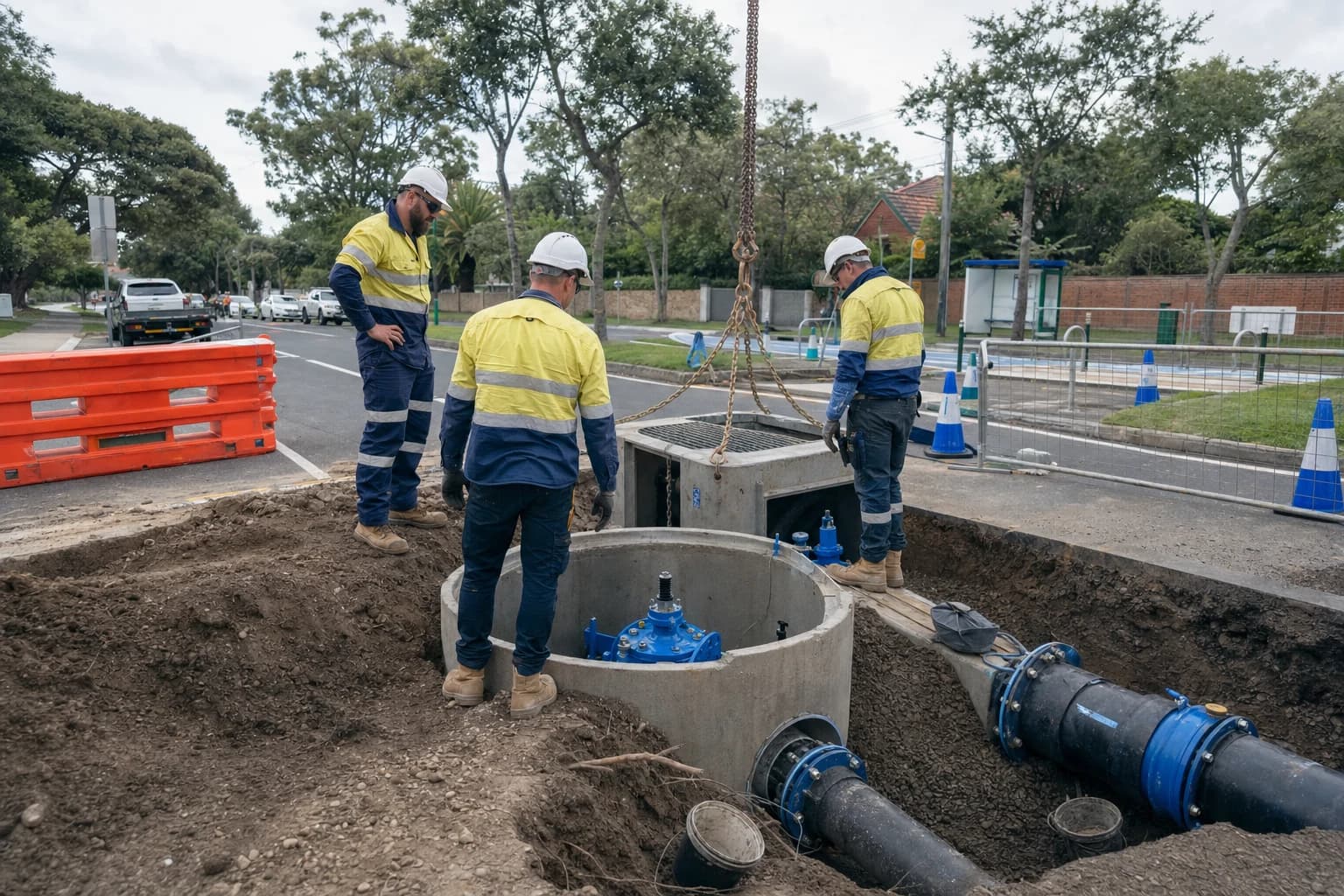
Programmes range from potable water main construction and renewal to valve upgrades and network extensions for growth corridors. Condition assessment often precedes renewal so asset owners prioritise the highest-risk mains first.
Wastewater infrastructure: reliable sewer networks
Wastewater infrastructure moves used water and sewage from properties to treatment plants through gravity sewers, rising mains, manholes, and pump station interfaces. Unlike potable systems, hygiene control, odour management, and spill prevention shape every stage of delivery.
Renewal programmes target pipe structural condition, infiltration, and capacity constraints before failures affect communities. Live-network methodology keeps services operating while sections are bypassed, repaired, or replaced.
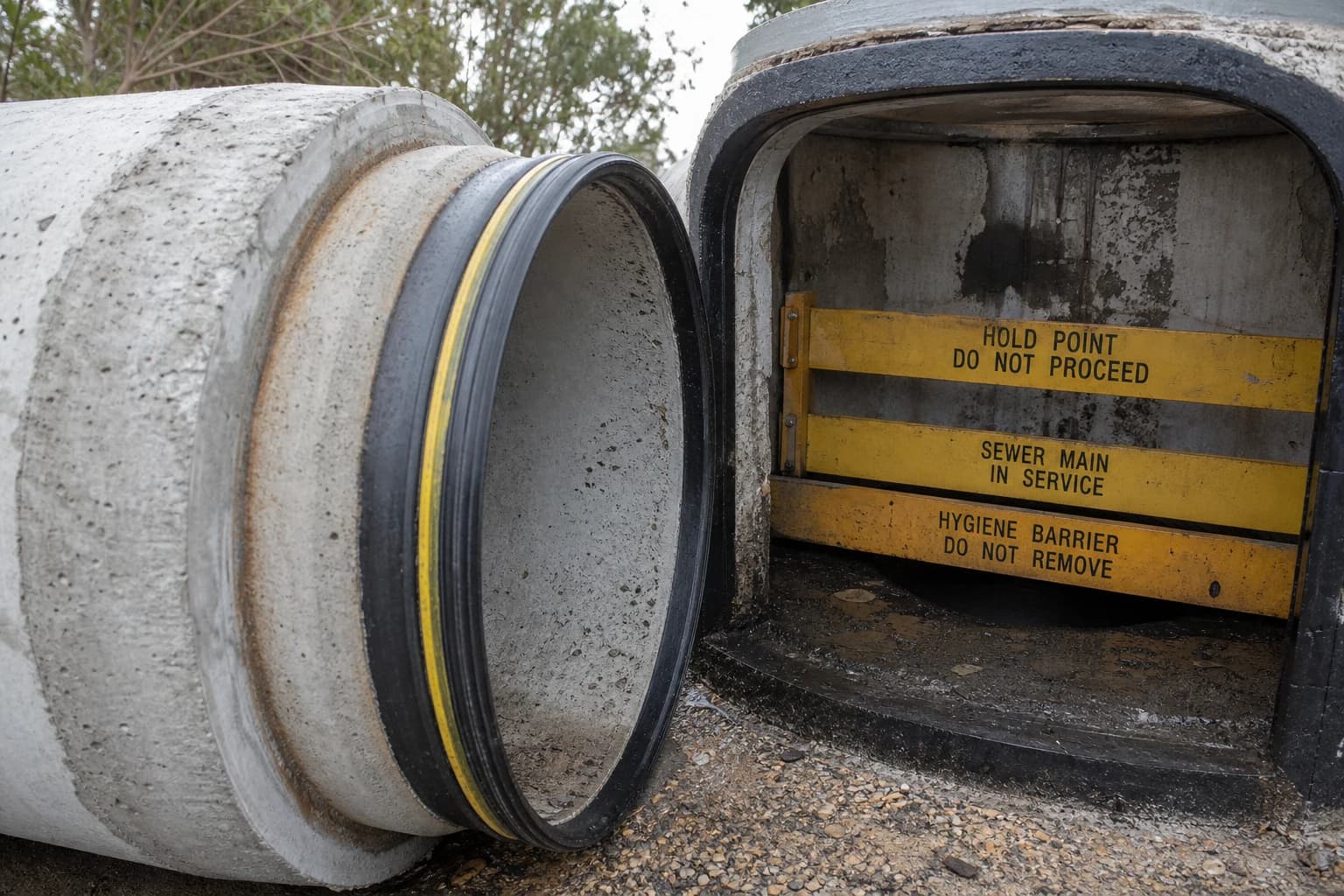
Coreflow supports wastewater rehabilitation and construction with crews trained for confined spaces, cleaning protocols, and stakeholder communication in dense urban catchments.
Stormwater infrastructure: managing peak flows and flood risk
Stormwater infrastructure collects and conveys rainfall runoff from roofs, roads, and developments through pits, pipes, channels, and detention assets. Councils and civil programmes invest in stormwater upgrades when catchments intensify, flood risk rises, or ageing drainage assets fail during storm events.
Design and construction must handle variable flow rates, siltation, and integration with road levels, kerbs, and property boundaries. Maintenance programmes keep pits and pipes clear so systems perform when rain intensity peaks.
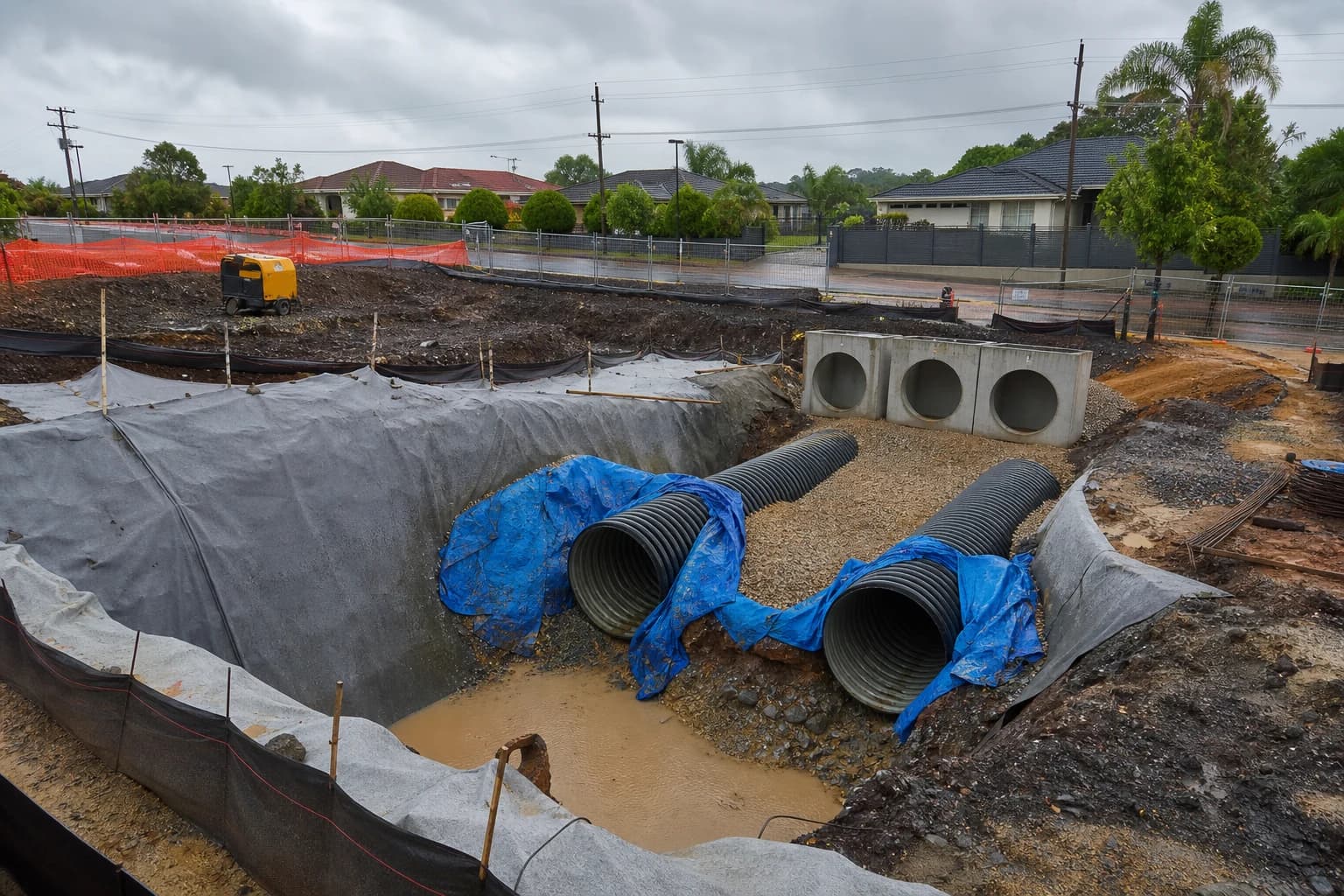
Typical scopes include stormwater drainage upgrades — pit and pipe renewal, channel remediation, and capacity improvements across multi-site council programmes.
Culverts and piped drainage: when flow paths cross corridors
Culvert construction is sometimes discussed separately from piped stormwater because culverts are structural crossings — box culverts, pipe culverts, and arch structures that carry water under roads, rail lines, embankments, and developments. They manage flow paths where open channels would interrupt transport corridors.
Asset owners assess culverts for capacity, structural condition, scour, and debris blockage. Renewal choices include lining, replacement, or upsizing when catchment runoff increases. Poor culvert performance often appears as road flooding upstream or erosion downstream.
Coreflow delivers culvert construction and remediation alongside broader stormwater programmes, helping councils and civil contractors coordinate corridor access and flow continuity.
Culvert assets on road and corridor programmes
On corridor renewals, culvert works are staged around traffic management, depth, and groundwater. Box culverts suit wide flow paths; pipe culverts fit narrower crossings. Installation quality — bedding, jointing, and headwall details — determines long-term performance.
Integration matters. A culvert upgrade may interact with upstream stormwater pits and downstream channels. Planning both together avoids solving flooding at the crossing while leaving bottlenecks elsewhere in the catchment.
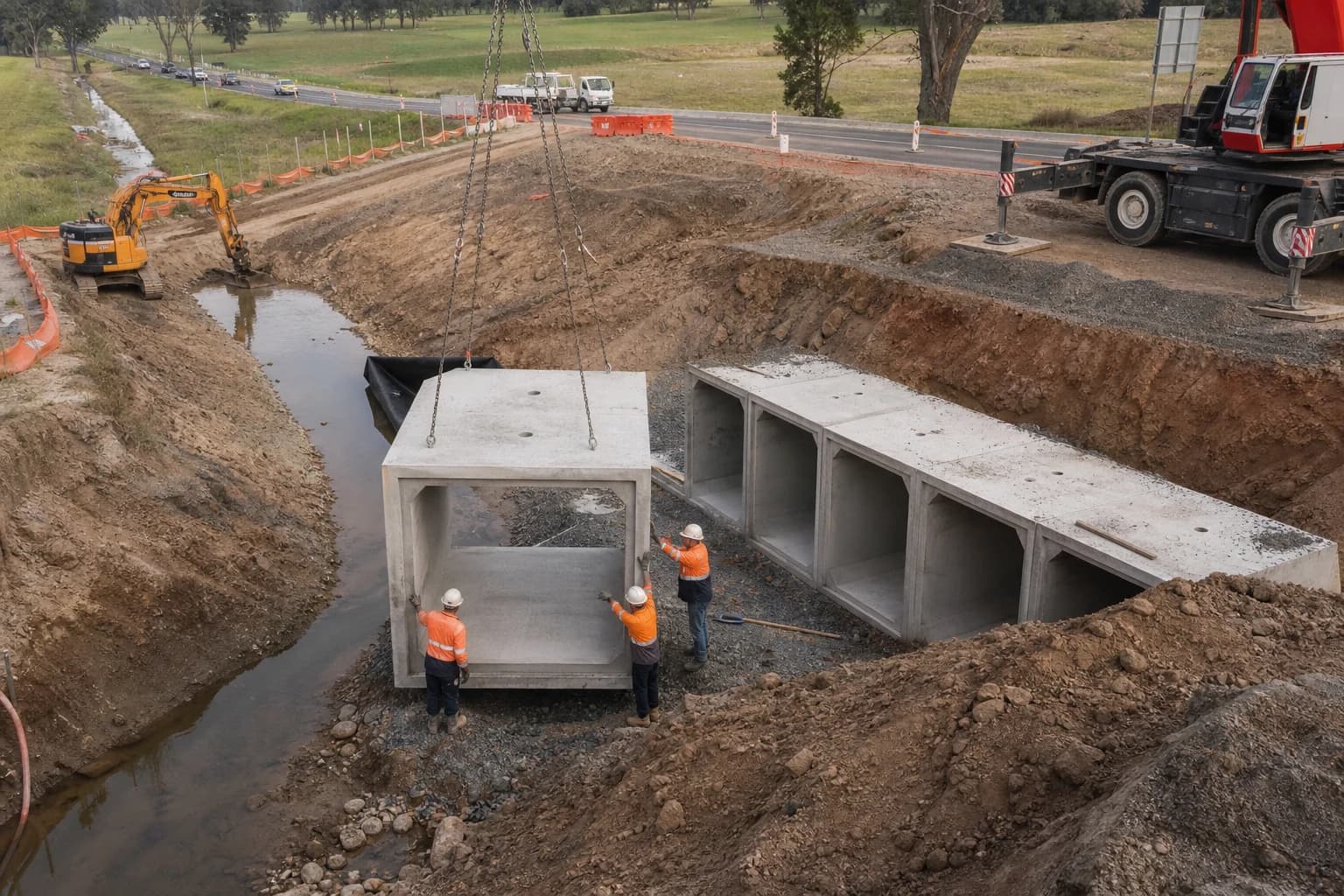
For programme examples spanning drainage and crossings, review stormwater and culvert project capability and council-facing context on industries we serve.
Planning delivery across all four waters
Asset owners get the best outcomes when potable, wastewater, stormwater, and culvert scopes share a single programme logic — corridor sequencing, outage windows, environmental approvals, and community communication.
Inspection, condition assessment, renewal, new infrastructure construction, and maintenance can be bundled or staged depending on accreditation requirements and contractor capability. Integrated four-water partners reduce handover gaps between asset types.

If you are comparing delivery approaches or accreditation requirements, read the Coreflow FAQ or contact our team with your asset mix, programme location, and target dates.
Common questions
Frequently asked questions
What are the four waters in infrastructure?
The four waters are potable water (drinking-water networks), wastewater (sewer systems), stormwater (drainage networks), and culverts (structural flow crossings under corridors). Together they cover the main water-related asset classes on utility and council programmes across Sydney and NSW.
How is stormwater infrastructure different from culvert construction?
Stormwater infrastructure typically refers to pits, pipes, and channels that collect and convey runoff across a catchment. Culvert construction focuses on structural crossings that carry water beneath roads, rail lines, or embankments. Both manage storm flows, but culverts solve corridor crossing constraints rather than general street drainage alone.
Why do contractors group potable and wastewater separately?
Potable and wastewater systems have different risk profiles. Drinking-water works prioritise pressure, water quality, and supply continuity. Wastewater works require hygiene controls, spill prevention, and odour management on sewer assets. Accreditation, method statements, and crew training reflect those differences even when trenches share a corridor.
Who is responsible for stormwater and culverts in Sydney?
Responsibility varies by asset ownership. Councils often own local stormwater drainage and many culverts on public roads. Water authorities focus on potable and wastewater networks. Developers may build servicing assets that later vest to authorities. Programme leads should confirm asset ownership before scoping works.
Related pages