
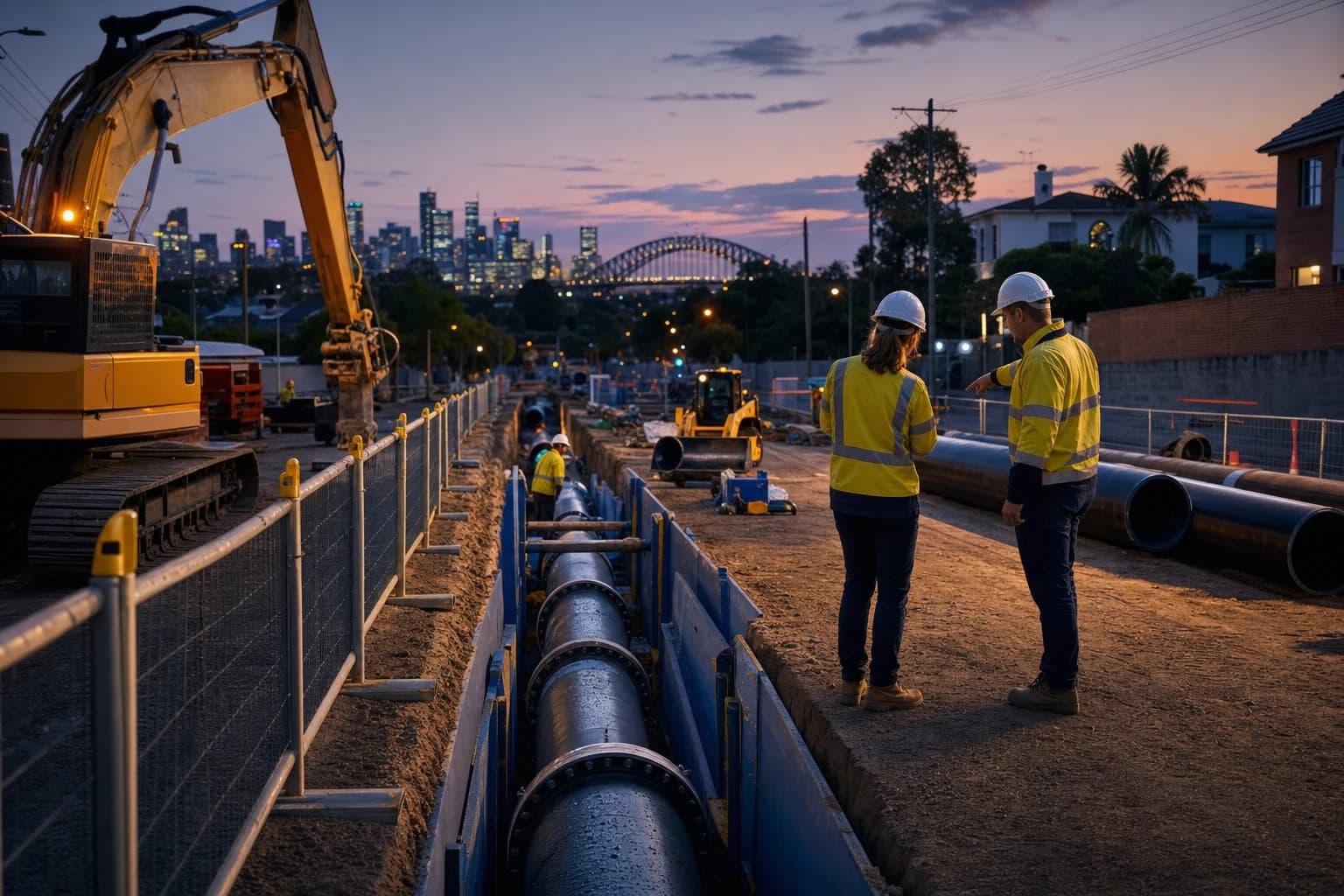
What Does a Water Infrastructure Contractor Do in Sydney?
A practical guide to what a water infrastructure contractor does in Sydney — four-water capability, live-network delivery, accreditation, and how asset owners choose the right civil water partner across NSW.
Service intelligence
What contractors deliver across Sydney and NSW
On this page
If you manage potable mains, sewer renewals, stormwater upgrades, or culvert works in Sydney, you are rarely buying a single trade. You are engaging a water infrastructure contractor who can plan, construct, renew, and maintain assets on live networks — with documentation, safety controls, and community impact in mind.
A water infrastructure contractor in Sydney typically self-performs civil utility scopes across the four waters — potable water, wastewater, stormwater, and culverts — while coordinating with designers, project managers, and asset owners. The best partners reduce programme risk by combining field crews, technical leadership, and practical experience on live-network water projects across metropolitan and regional NSW.
This pillar guide explains what that role looks like in practice, when specialist water infrastructure services Sydney teams are engaged, and how accredited delivery differs from general civil contracting on sensitive assets.
What does a water infrastructure contractor do in Sydney?
At its core, a water infrastructure contractor Sydney asset owners rely on plans and delivers physical works on water and drainage networks: excavating and backfilling trenches, installing or renewing pipe and pit assets, tying into live services, testing, commissioning support, and handover documentation. That scope spans greenfield connections, capital upgrades, and renewal programmes where services must stay operational.
Unlike broad civil earthworks, water network construction demands hygiene awareness on wastewater assets, pressure and isolation discipline on potable systems, flow management on stormwater catchments, and structural care on culverts under roads and corridors. Contractors with four-water focus bring method statements, crew training, and supervision models built for those constraints — not adapted from generic road or building sites.
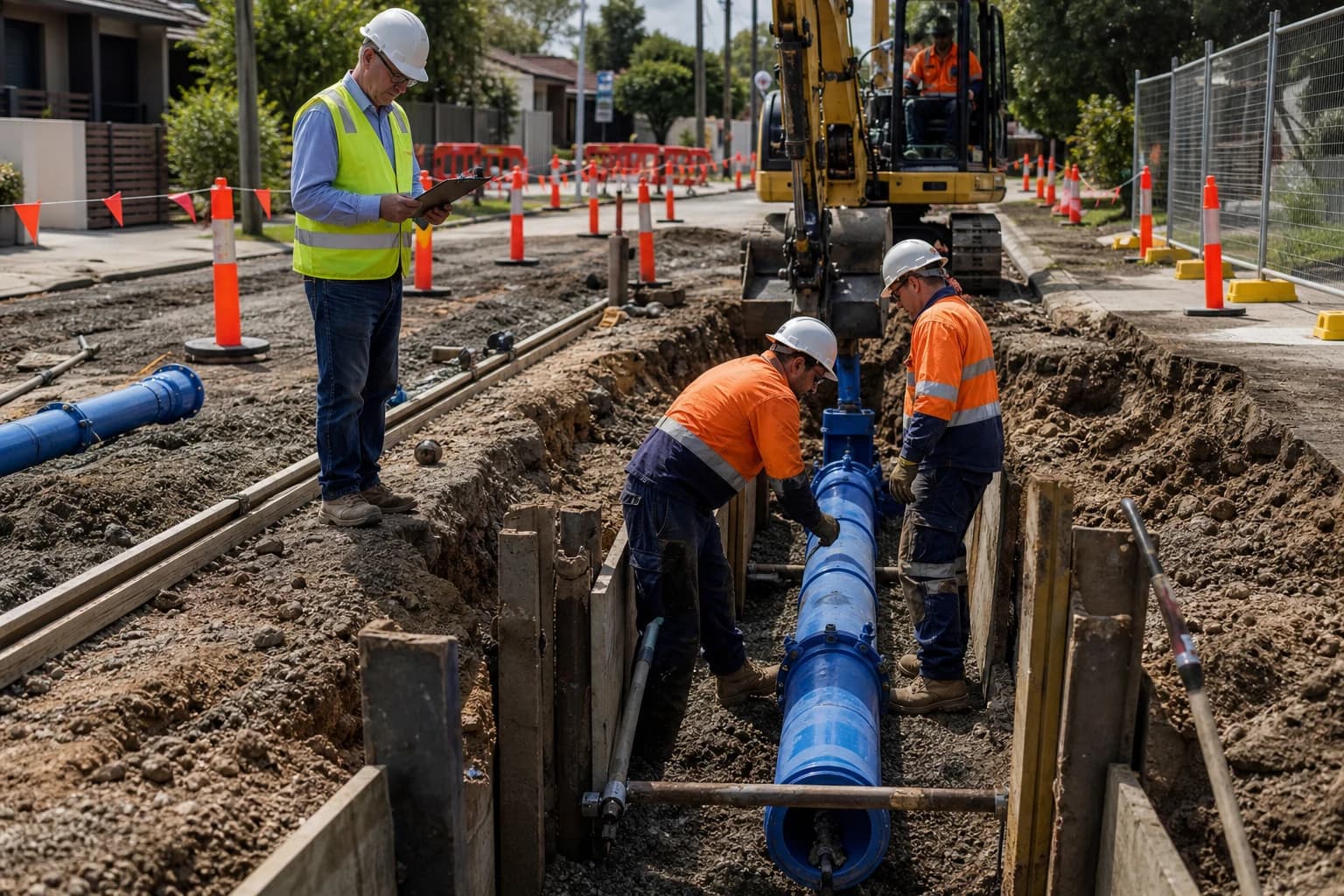
On Sydney programmes, that often means working in dense streets, coordinating with traffic control, sequencing night works where required, and maintaining clear communication with utilities or council officers who need daily progress visibility.
How four-water capability shapes delivery scope
Many asset owners structure programmes by water type. A capable civil water contractor NSW teams can move across potable water main construction and renewal, wastewater rehabilitation, stormwater drainage upgrades, and culvert construction and remediation without treating each asset class as a separate subcontracting exercise.
Shared capability matters because corridors often mix assets — a road renewal may include stormwater pits, a potable main parallel, and a culvert crossing. One contractor with integrated four-water experience can sequence isolations, trench sharing, and reinstatement more efficiently than fragmented trades.

Lifecycle services extend the value. Beyond new builds, contractors support inspection inputs, renewal prioritisation, maintenance cleaning, and rehabilitation methods that extend asset life while keeping disruption low for communities.
When councils, water authorities, and contractors engage specialist crews
Specialist water infrastructure services Sydney teams are usually engaged when programme risk, accreditation requirements, or live-network complexity exceed business-as-usual maintenance. Typical triggers include ageing mains requiring renewal, sewer rehabilitation after condition assessment, council drainage upgrades across multiple sites, developer servicing under Section 73 pathways, and principal contractor packages needing proven utility capability.
Water authorities and utilities often require accredited constructors for defined major and minor works scopes. Councils may procure drainage and culvert programmes through panel arrangements or project-specific tenders. Tier-one civil contractors frequently embed a four-water specialist for self-perform utility scopes rather than managing multiple small subcontractors on tight corridors.
For context on who owns which decisions across the ecosystem, see industries Coreflow supports — water authorities, councils, government programmes, contractors, developers, and commercial asset owners each bring different drivers, but all need reliable field execution.
What accredited water contractor status means on live networks
An accredited water contractor Sydney programmes reference is not a marketing label — it signals that a constructor meets authority requirements for quality, safety, and documentation on regulated works. Accreditation frameworks typically cover management systems, supervisor competency, incident reporting, environmental controls, and repeatable methodology for isolations, trenching, and reinstatement.
On live networks, that translates to practical controls: verified service locations, approved isolation points, hygiene procedures on wastewater assets, pressure testing protocols on potable tie-ins, and clear hold points before backfill or road reopening.

Live-network methodology also shapes community outcomes. Staged construction, bypass pumping where applicable, and traffic management plans reduce outage windows. If your programme spans renewal and rehabilitation or new infrastructure construction, confirm how your contractor plans service continuity before mobilisation — not after the first shutdown.
How to evaluate a civil water contractor in NSW
Choosing a contractor is a delivery decision, not a price-only comparison. Use the following checklist when shortlisting partners for Sydney or regional NSW work:
Confirm four-water experience relevant to your asset type — potable pressure assets, sewer renewal, drainage pits and pipes, or culvert structures — and ask for comparable programme references without expecting confidential client names if contracts restrict disclosure.
Review accreditation status and management system maturity for the works class you are procuring. Ask how isolations, quality hold points, and environmental controls are documented on site.
Assess live-network planning: outage windows, stakeholder communication, traffic and community impact, and how the contractor escalates unforeseen service conflicts.
Validate supervision depth — experienced leading hands, project engineers, and safety officers who understand utility standards rather than generic construction oversight.
Examine handover quality: as-built records, test certificates, photos, and maintenance recommendations that help asset owners close out programmes cleanly.
When you are ready to discuss scope, contact Coreflow Enterprise with programme location, asset type, and target dates so technical input reflects your live-network constraints.
How Sydney and regional NSW programmes differ on the ground
Metropolitan Sydney programmes often compete for lane closures, basement services, and tight reinstatement windows. Regional NSW work may involve longer travel, different soil conditions, and dispersed sites — but the same service continuity expectations apply.
A contractor delivering across both contexts should demonstrate logistics planning, regional crew capability, and consistent safety culture rather than a Sydney-only playbook bolted onto country works.
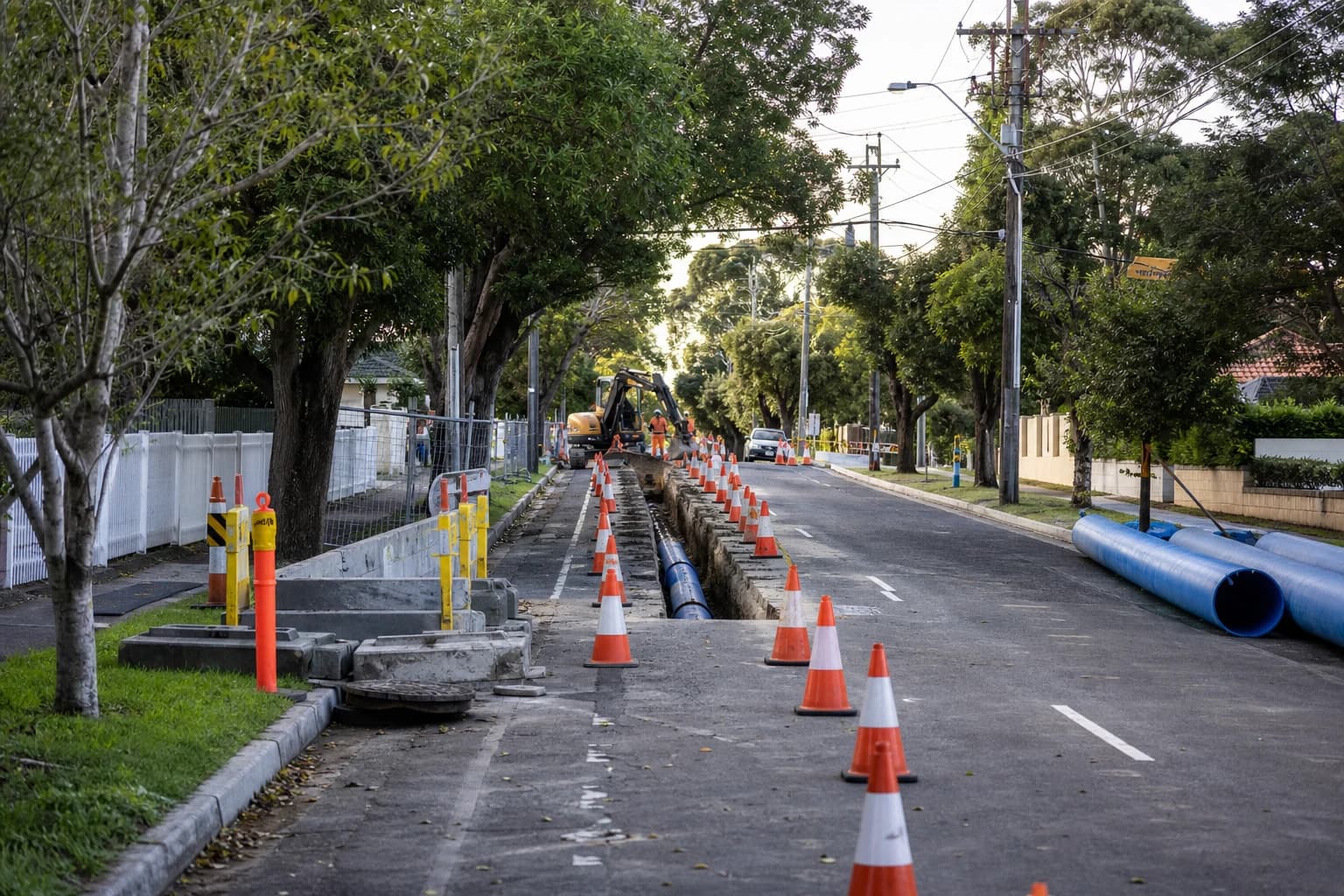
Coreflow delivers water infrastructure services Sydney asset owners expect and supports programmes throughout NSW. For background on company capability and accreditation positioning, see about Coreflow Enterprise and common delivery questions on the FAQ page.
What good technical planning looks like before works start
Strong water network construction outcomes start before the first excavation. Condition intelligence, design review, constructability input, and method selection — open-cut, trenchless, or hybrid — should align with asset criticality and community tolerance for disruption.
Inspection and condition assessment can inform renewal prioritisation. Maintenance programmes keep assets performing between capital cycles. When planning and field delivery sit with one experienced partner, asset owners spend less time translating reports into workable site methods.

For sustainability-led programmes, consider how renewal extends asset life, reduces emergency failures, and supports long-term network resilience — not only immediate construction outputs.
Common questions
Frequently asked questions
What is the difference between a water infrastructure contractor and a general civil contractor?
A water infrastructure contractor specialises in potable, wastewater, stormwater, and culvert assets on live networks — including isolations, hygiene controls, pressure systems, and authority documentation. General civil contractors may excel at earthworks or structures but lack the integrated four-water methodology utilities and councils expect on regulated programmes.
Do I need an accredited water contractor for Sydney water authority works?
Many water authority major and minor works require constructors who meet accreditation and management system standards. Confirm the accreditation class required for your specific scope before tendering or direct engagement — requirements vary by works type and contract framework.
What water infrastructure services are most common in Sydney programmes?
Common scopes include potable water main renewal, wastewater sewer rehabilitation, stormwater pit and pipe upgrades, culvert replacement, Section 73 servicing for developments, and live-network maintenance. Programme mix depends on asset age, growth corridors, and council or utility capital plans.
How far beyond Sydney can a water infrastructure contractor deliver?
Established NSW contractors support metropolitan Sydney, regional centres, and remote programme sites when mobilisation, supervision, and supply chains are planned realistically. Ask about crew availability, travel logistics, and recent regional delivery experience for programmes outside the Sydney basin.
Related pages