
How Live-Network Water Works Can Minimise Community Disruption
How live water network construction teams minimise community disruption — low disruption civil works, trenchless rehabilitation, community access planning, and staging methods for Sydney and NSW live-network programmes.
Sustainability & resilience
Lower disruption on live networks
On this page
Residents measure infrastructure programmes by what they experience at the kerb — noise, dust, blocked driveways, discoloured water, and uncertain outage windows. Live water network construction that ignores those realities often finishes on time in the contract programme yet fails in community trust.
This service guide explains how asset owners and delivery teams can reduce that impact without compromising safety or authority compliance. The focus is practical methodology — staging, access, trenchless options, and communication — for Sydney metro streets, regional town centres, and council drainage corridors across NSW.
For broader sustainability context, see Coreflow's sustainability approach and how lower disruption sits alongside asset life extension and responsible delivery.
Why community disruption is a programme risk — not only a PR issue
Disruption drives complaints, political escalation, and emergency rework when access plans fail. Councils and utilities often absorb hidden costs — extended traffic control, repeated reinstatement, after-hours call-outs, and programme float consumed by stakeholder management.
Sustainable delivery treats community impact as a design constraint equal to pipe specification. That mindset shifts decisions early: which method, which corridor, which outage window, and which communication channel before plant mobilises.
Programmes that pair renewal timing with disruption planning often start with renewal prioritisation intelligence — knowing which assets must be addressed soon, and which corridors can tolerate longer staged works.
What live water network construction requires on NSW streets
Live water network construction means services stay operational — or return within agreed windows — while pipe is replaced, tied in, tested, and reinstated. Unlike greenfield trenches in open fields, metro and regional street works compete with buses, school zones, shop deliveries, and parallel utility maintenance.
Hygiene controls on wastewater assets, pressure discipline on potable tie-ins, and flow management on stormwater add complexity. Low disruption is not a single technique; it is a bundle of decisions across method, duration, and communication.
If your scope spans multiple asset classes, read the four waters explained to understand how isolations and access differ between potable, sewer, stormwater, and culvert works.
Community access planning before the first excavation
Community access planning should map how people and vehicles move through the works zone — not only how pipe fits in the trench. Identify school peaks, waste collection routes, disability parking bays, ride-share drop-offs, and business loading zones that cannot be blocked without notice.
Produce simple access diagrams for residents and traders. Mark pedestrian detours, temporary crossings, and dates when driveways will be affected. Councils and utilities that share these diagrams early see fewer escalation calls during construction.

Council programmes with multi-site drainage upgrades benefit from partners experienced in local council delivery and stormwater network works where access impacts multiply across suburbs.
Low disruption civil works through staging and short windows
Low disruption civil works on water networks rely on tight sequencing: locate services, excavate, fit pipe, test, backfill, and reinstate in the smallest practical increments. Long open trenches across entire blocks increase trip hazards, parking loss, and complaint volume.
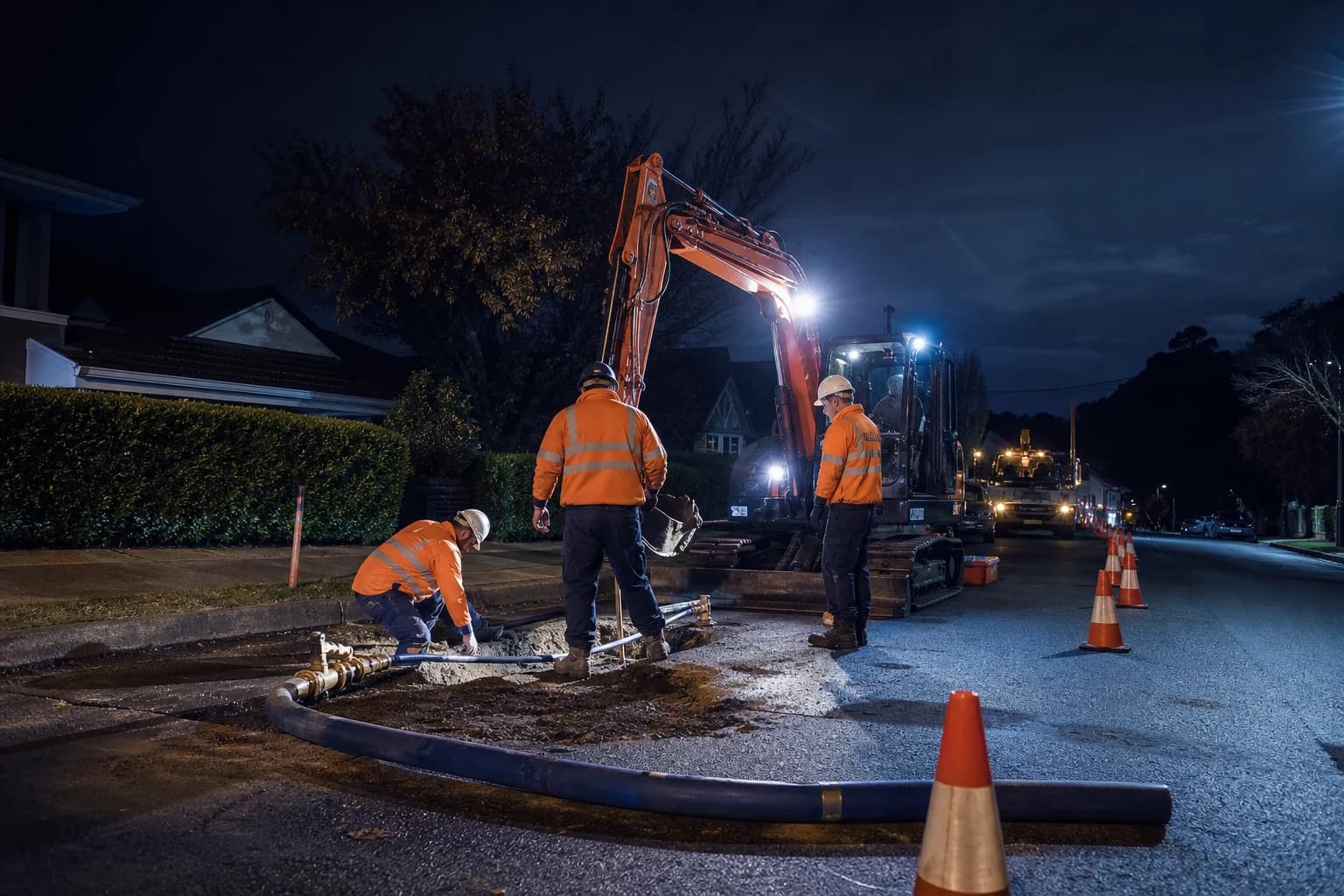
Night and weekend windows can help when authority approvals and noise conditions allow — but they are not free. Labour, lighting, and supervision costs rise; communities still expect advance notice. Use after-hours work selectively for tie-ins and road crossings, not as a default for entire programmes.
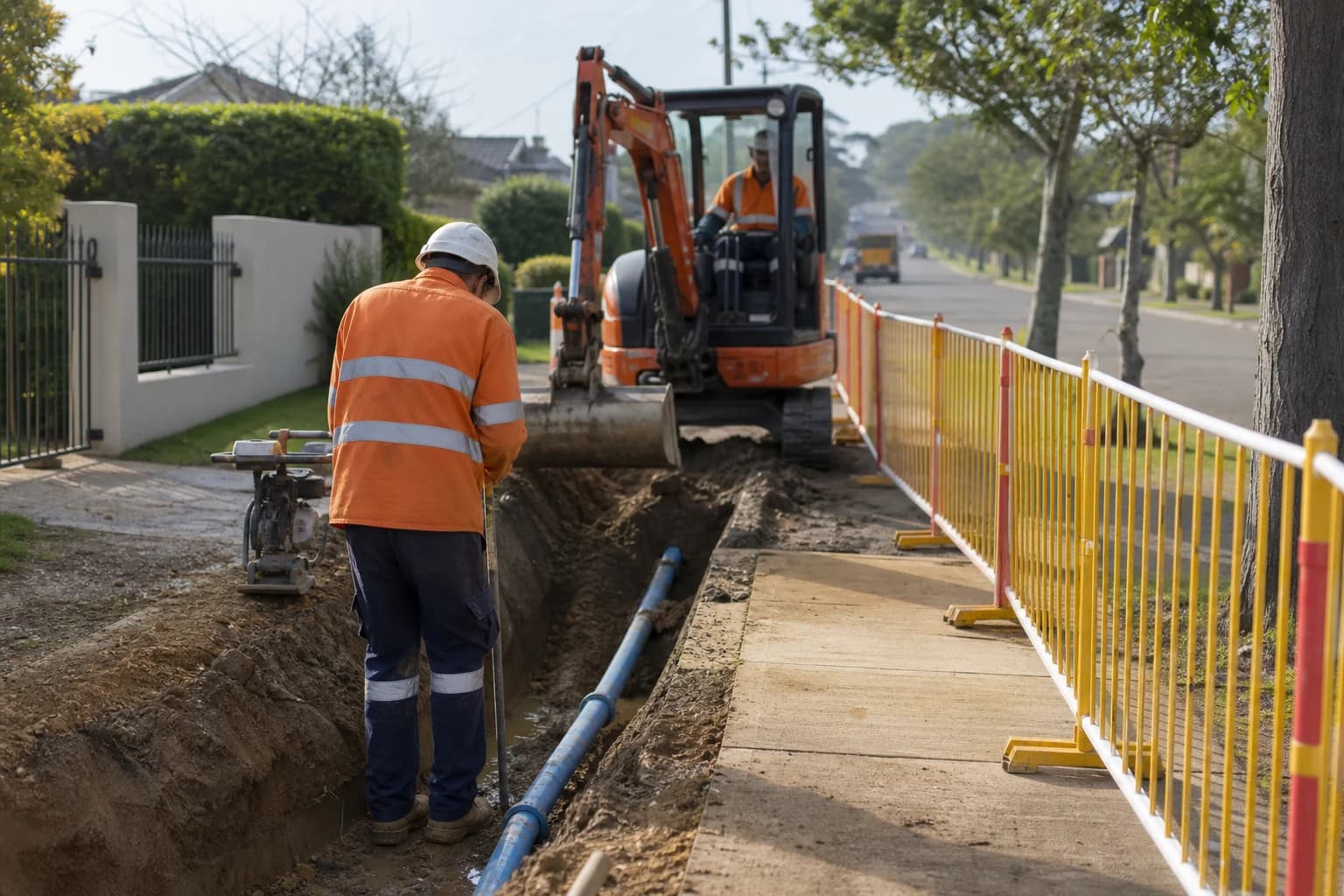
Compact plant, vacuum excavation near sensitive services, and prefabricated assemblies reduce time with the road open. Programme managers should reward contractors who propose shorter open-trench durations, not only lower unit rates.
Outage planning, bypasses, and service continuity
Define maximum outage duration per customer segment before construction starts. Potable programmes may require temporary bypass mains, tanker supply, or zone transfers. Wastewater scopes need flow management, plugging discipline, and odour controls when gravity lines are interrupted.
Document who approves extended outages and how customers are notified — SMS, door knocks, authority apps, or council channels. When reality exceeds the plan, proactive updates protect trust more than technical excuses after the event.
Coreflow delivers potable water construction and renewal and wastewater rehabilitation with live-network methodology designed around agreed outage windows.
When trenchless rehabilitation reduces surface impact
Trenchless rehabilitation — pipe bursting, slip-lining, and cured-in-place lining where conditions suit — can dramatically shrink excavation footprints. It is not universal: brittle materials, tight bends, shallow depths, and unknown third-party crossings can disqualify trenchless options.
Run feasibility early with CCTV, depth confirmation, and pilot pits at conflict points. Compare trenchless whole-of-life cost including reinstatement savings, not only installation rates. When trenchless fits, communities often accept shorter localised pits instead of continuous open cuts.

See renewal and rehabilitation for how open-cut and trenchless methods are combined on NSW live-network programmes.
Stakeholder communication and traffic management discipline
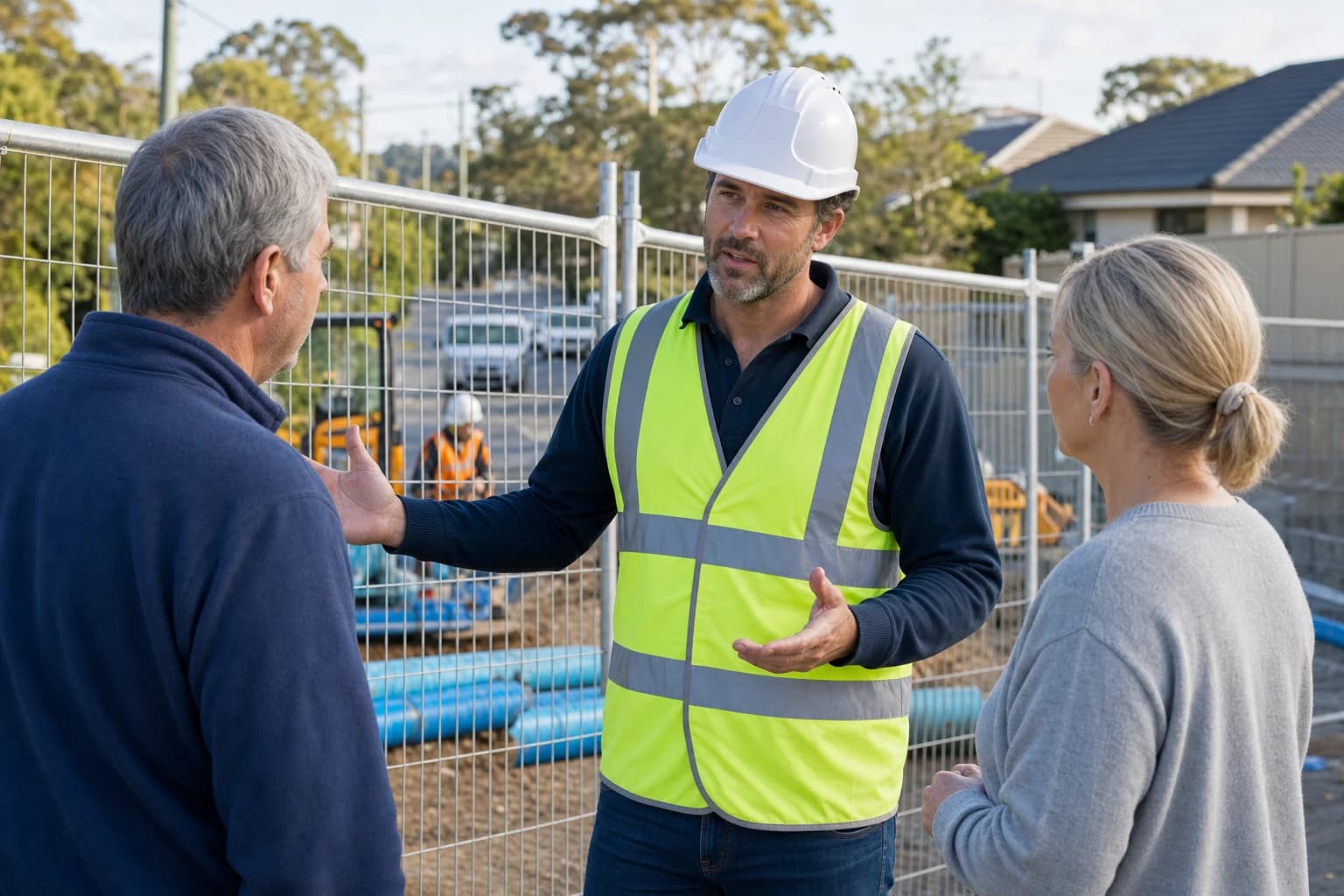
Assign a named site contact for residents and traders — someone who returns calls and can explain what is happening tomorrow, not only what the contract says. Traffic management plans should be checked daily against actual works; outdated signage erodes confidence fast.
Coordinate with road authorities when bus routes, clearways, or event traffic overlap your programme. Surprises at school term start or holiday peaks are preventable with a shared calendar.
Principal contractors embedding utility scopes should confirm their partner holds proven water authority accredited constructor capability where authority hold points apply — accreditation and disruption control often rise together on inspection-heavy works.
Sequencing water infrastructure construction across mixed corridors
Water infrastructure construction on mixed corridors — potable parallel to sewer, stormwater pits at intersections, culverts under carriageways — needs integrated sequencing. Shared trenches can reduce total disruption when designed deliberately; accidental sharing creates rework and extended outages.
Lookahead plans should show isolations, testing hold points, and reinstatement standards for each stage. Digital photos and as-built updates captured daily make authority inspections faster and reduce reopening pavements for missing evidence.

Review potable water main renewal project capability and water infrastructure construction for how Coreflow sequences live-network scopes across Sydney and regional NSW.
Low-disruption programme checklist for asset owners
Use this checklist during procurement and pre-start planning:
Confirm community access maps, outage limits, and notification channels before mobilisation.
Compare open-cut, trenchless, and hybrid methods against corridor constraints and whole-of-life disruption cost.
Set maximum open-trench lengths and daily work fronts — not only programme finish dates.
Align traffic management, bus routes, and school access with council and road authority stakeholders.
Define escalation paths when outages extend beyond agreed windows.
Require daily progress visibility — photos, test results, and reinstatement status suitable for authority and community updates.
To discuss a programme with disruption constraints, contact Coreflow with location maps, asset types, and target outage windows — or read what a water infrastructure contractor does in Sydney for broader delivery context.
Common questions
Frequently asked questions
What is live water network construction?
Live water network construction is utility work performed on drinking-water, wastewater, or drainage assets while services remain operational or return within agreed outage windows. It requires isolations, testing, hygiene controls, and reinstatement discipline that greenfield construction does not.
How can trenchless rehabilitation reduce community disruption?
Trenchless methods such as pipe bursting or lining can renew mains through existing corridors with smaller excavation footprints than full open-cut replacement. Feasibility depends on pipe material, depth, bends, and third-party services — early investigation prevents forcing trenchless where conditions do not suit.
What belongs in a community access plan for water works?
Access plans should map pedestrian routes, driveways, school and bus movements, business deliveries, disability parking, and emergency vehicle paths. They should include dated notifications, detour diagrams, and a named site contact — not only traffic management compliance paperwork.
Are night works the best way to minimise disruption?
Night works can shorten visible daytime disruption for specific tie-ins or crossings, but they increase cost and still require community notice. Sustainable programmes use after-hours windows selectively alongside staging, trenchless options, and shorter daytime open-trench lengths.
Related pages