

Water Infrastructure for NSW Councils: Planning Reliable Renewal Programs
A pillar guide to water infrastructure for councils NSW — planning council water asset renewal, council drainage upgrades, stormwater programs NSW delivery, and local government infrastructure procurement with reliable staging across live communities.
Public infrastructure & procurement
Planning council renewal programmes
On this page
NSW councils manage thousands of drainage pits, pipes, culverts, and local water assets spread across suburbs, town centres, and regional corridors. Water infrastructure for councils NSW teams must keep those assets performing through flood events, growth pressure, and ageing networks — often with capital budgets that never quite match the risk register.
Reliable renewal programmes do not start at tender. They start when asset owners, engineers, and procurement leads agree how priorities are ranked, how live communities will be affected, and how delivery partners will be measured beyond lowest price.
If your council is new to multi-year utility programming, begin with the four waters explained — then return here for council-specific planning and procurement steps.
Why council renewal programmes fail before construction starts
Common failure modes are predictable: condition data scattered across spreadsheets, renewal scopes bundled without constructability review, and procurement models that reward short open-trench durations on paper but not in live streets.
Councils also juggle competing priorities — state funding windows, ward equity expectations, developer contributions, and emergency repair call-outs that consume the same crews scheduled for planned works.
Sustainable outcomes improve when renewal planning connects to lower-disruption delivery principles and live-network community impact methods before programmes are packaged for tender.
Building a council water asset renewal prioritisation model
A defensible council water asset renewal model ranks assets using condition, consequence of failure, service criticality, and corridor opportunity — not only age. Flood-prone catchments, school-adjacent drains, and culverts under busy arterials often outrank lower-risk residential pipes with similar inspection scores.
Integrate maintenance history, resident complaints, insurance claims, and road pavement programmes. When councils align drain renewal with scheduled road works, communities experience one disruption cycle instead of two.
Coreflow supports inspection and condition assessment that feeds renewal prioritisation — site proving, reporting, and technical input before scopes are locked for procurement.
Stormwater programs NSW councils run across metro and regional networks
Stormwater programs NSW councils deliver range from single-catchment upgrades to multi-year pit and pipe replacements spanning dozens of sites. Metro programmes contend with dense services, bus corridors, and tight reinstatement standards; regional programmes add travel logistics, limited contractor pools, and seasonal access constraints.
Programme managers should group sites by geography and complexity — not only by contract value. Batch similar pit replacements together; isolate complex culvert works that need longer outages and specialist plant.
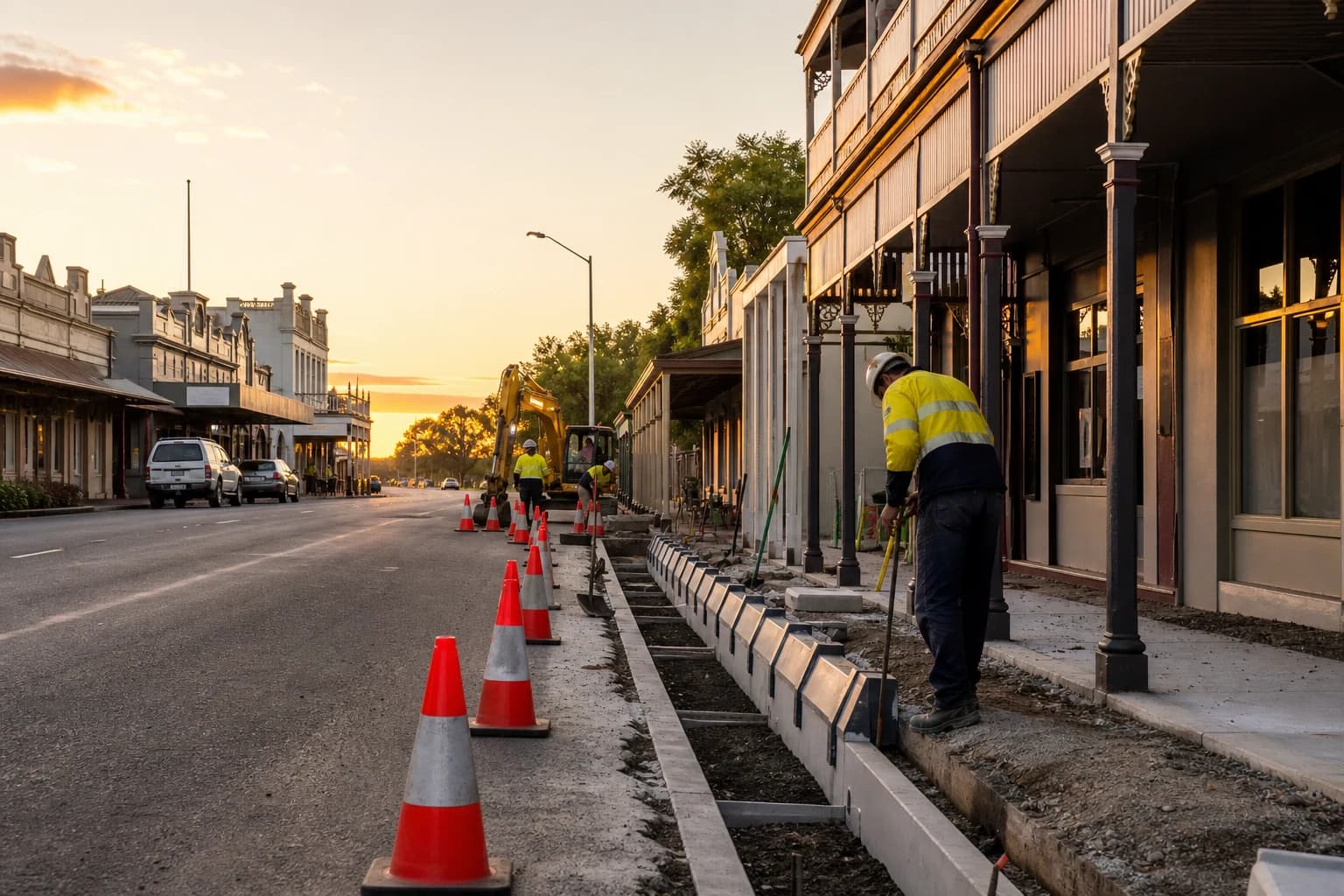
See stormwater and drainage services and stormwater and culvert programme capability for how multi-site council delivery is staged across NSW.
Planning council drainage upgrades on live suburban corridors
Council drainage upgrades succeed when access, traffic, and reinstatement are designed per street — not copied from a standard drawing set. Pedestrian routes, school zones, trader loading bays, and bus stops should be mapped before pit locations are finalised.
Specify maximum open-workfront lengths, acceptable outage durations for properties, and photo documentation standards for handover. Contractors respond to clarity; vague disruption limits become claims later.
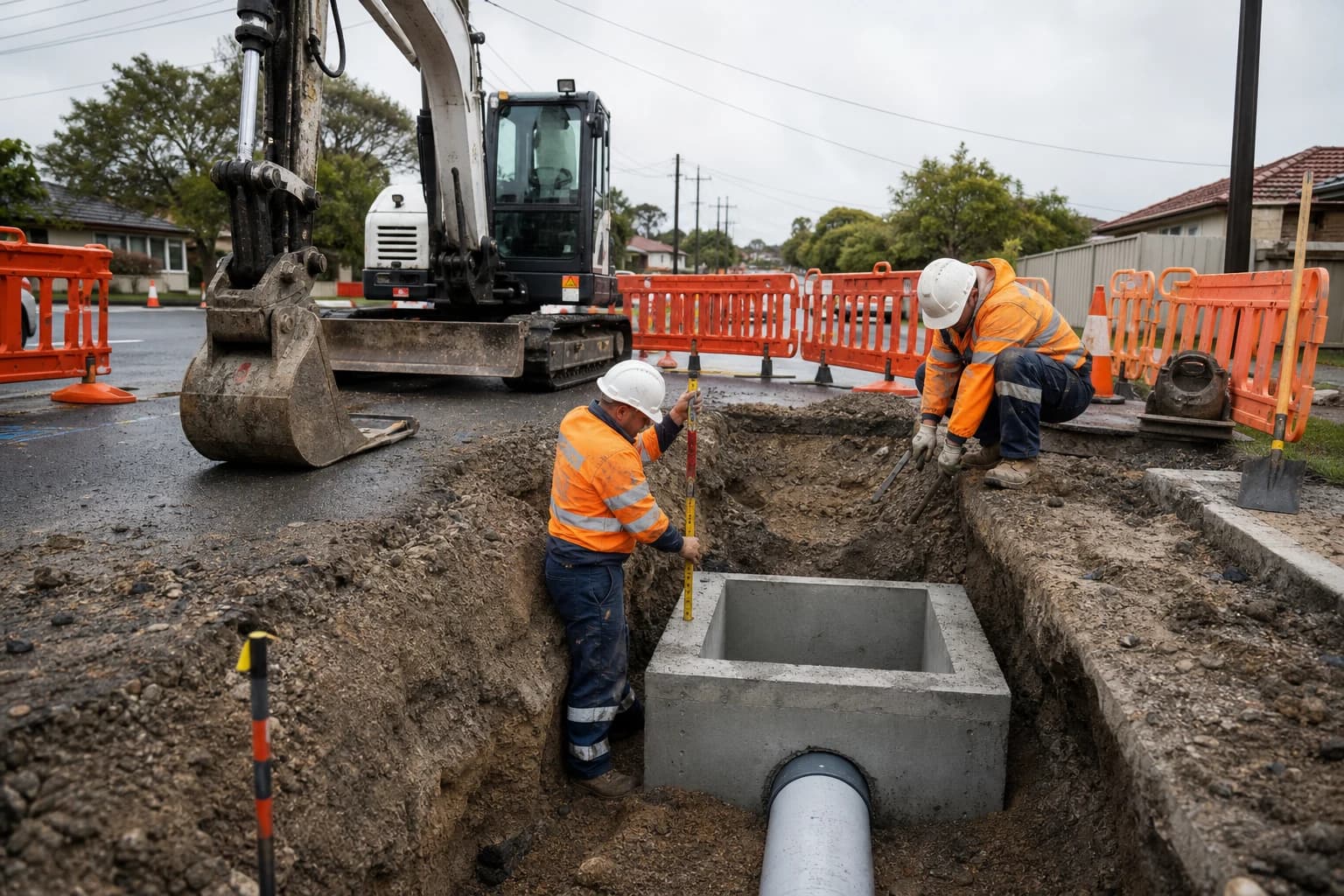
Review council drainage upgrade project experience for staged multi-site delivery patterns that reduce repeated mobilisation across suburbs.
Culverts, pits, and detail work that shapes programme credibility
Culvert and pit renewals are where council programmes win or lose inspection confidence. Headwall condition, joint types, sediment traps, and scour protection must match design intent — especially at road crossings and rail interfaces.
Detail-heavy scopes need hold points before backfill. Councils should require progressive inspection logs so officers are not asked to certify work already covered.
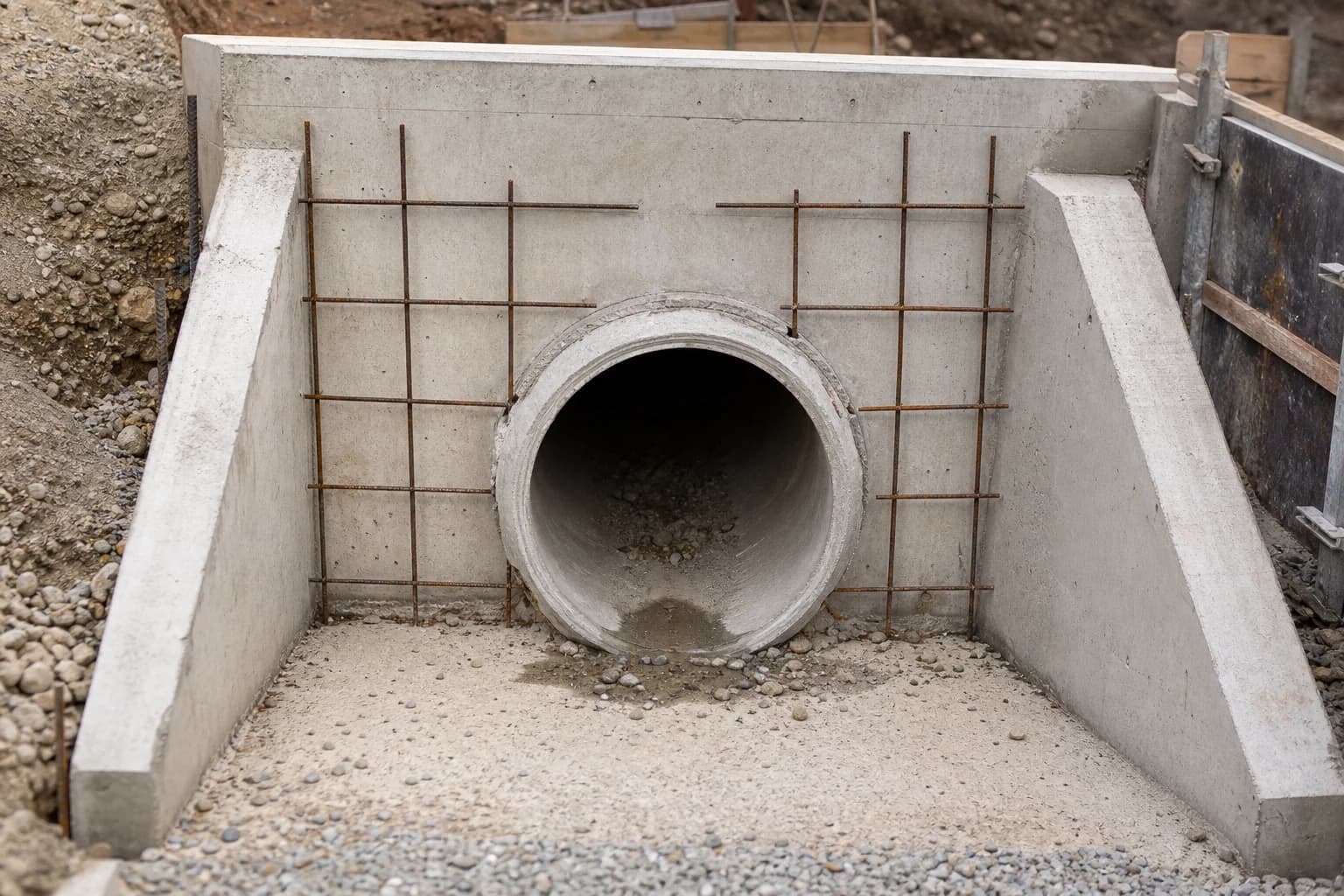
Culvert capability sits alongside drainage in culvert construction and remediation — many council corridors mix pit, pipe, and culvert assets on the same renewal programme.
Local government infrastructure procurement that rewards reliable delivery
Local government infrastructure procurement should score methodology, multi-site sequencing, supervision, and inspection pass quality — not only rate-based pricing. Panel arrangements work when capability is pre-qualified; project tenders work when scopes are complex or politically visible.
Define KPIs councils actually measure: open-trench duration, complaint volumes, reinstatement defects, inspection rework, and handover completeness. Tie reporting to monthly programme reviews, not only practical completion.

For accredited utility scopes that interface with authority networks, pair this guide with how to choose a water authority accredited constructor when procurement crosses council–utility boundaries.
Joint site reviews and methodology alignment
Hold joint site walks at representative locations before award — council engineers, traffic specialists, and contractor supervisors on the same footpath. Resolve access conflicts when they are cheap to fix on paper.
Method statements should reference programme sequencing across sites, not only single-location works. Councils benefit when contractors propose lookahead plans that integrate maintenance-of-traffic, community notice templates, and inspection windows.

Coreflow works with local councils and government programmes across NSW — adapting delivery to public-sector governance, documentation, and community expectations.
Council renewal programme planning checklist
Use this checklist when building or refreshing a multi-year renewal programme:
Consolidate asset registers, condition ratings, and failure history into one prioritised view.
Group sites by geography, complexity, and corridor opportunity — align with road and pavement programmes where possible.
Define disruption limits, access maps, and community notification standards per site class.
Confirm inspection hold points and handover documentation before tender issue.
Score tenders on methodology and programme KPIs — not headline rates alone.
Schedule monthly programme reviews with contractor lookahead plans and inspection status.
When renewal triggers are unclear, read when a water main needs renewal for asset-owner timing indicators that also apply to council-managed potable interfaces and shared corridors.
Moving from planning to appointment with confidence
Reliable council programmes treat renewal as a managed pipeline — condition intelligence, staged procurement, and field partners who understand public-sector accountability. The goal is not maximum annual spend; it is predictable risk reduction across communities councils serve.
Council officers and programme leads can contact Coreflow with catchment maps, asset lists, and target programme years — or explore renewal and rehabilitation and water infrastructure contractor capability before issuing tender documentation.
Common questions
Frequently asked questions
What water infrastructure do NSW councils typically manage?
Councils commonly manage stormwater pits, pipes, channels, culverts, and local drainage assets — plus interfaces with water authority networks where council corridors and developer contributions meet authority infrastructure. Programmes often span drainage upgrades, culvert renewal, and maintenance of flood-prone catchments.
How should councils prioritise water asset renewal?
Prioritise using condition data, consequence of failure, service criticality, and corridor opportunity — not age alone. Integrate maintenance history, flood complaints, and coordinated road programmes so renewal delivers community value without repeated disruptions.
What procurement model suits multi-site council drainage programmes?
Panel arrangements suit recurring pit and pipe scopes with pre-qualified partners. Complex culvert or high-visibility sites may warrant standalone tenders with methodology-weighted evaluation. Define KPIs for disruption, inspection pass rates, and handover quality — not only unit rates.
How can councils reduce community disruption during renewal programmes?
Plan access maps, maximum open-workfront lengths, and notification standards before construction. Batch sites geographically, align with road works where possible, and require contractor lookahead plans with community contact protocols — staging and communication matter as much as pipe specifications.
Related pages